Top 3 Alternatives of LogicGate Risk Cloud for Customizable Workflows
Many compliance teams hit limits in LogicGate Risk Cloud when they need workflow edits that do not require vendor tickets. The friction shows up as delayed change requests, restricted conditional logic, and brittle approval paths that break during audits.
By the end of this article you will have three concrete criteria for judging workflow flexibility, side by side details on Process Street and Onspring for each criterion, and a clear ranking that names the single best option for teams that need to own their own process logic.
What to Look For in Customizable Workflow Alternatives to LogicGate Risk Cloud
Evaluate risk management platforms by verifying they deliver granular workflow customization, real-time audit trails, and automated regulatory reporting.
Selecting the right workflow builder determines how easily your team can adjust processes as requirements change. Look for drag-and-drop interfaces that support conditional logic, approval routing, and task assignment without needing developer resources.
Conditional logic capabilities allow workflows to branch based on answers, risk scores, or data values. This automation reduces manual errors and speeds up decision-making across governance and compliance activities.
Role-based access controls protect sensitive information by restricting who can view, edit, or approve specific records. Strong user permissions settings support SOX compliance, GDPR, HIPAA, and ISO 27001 requirements.
Data encryption standards protect information both at rest and in transit. Verify that the platform meets SOC 2 expectations and offers field-level encryption for confidential data fields.
API access breadth matters when connecting risk registers, incident response systems, and third-party tools. Wide API coverage simplifies data mapping between platforms and supports real-time reporting needs.
Integration lists should cover common enterprise software already in use. Confirm connections to policy management tools, control testing platforms, and dashboard analytics solutions before committing.
Vendor management tools help track third-party risk through questionnaires, scorecards, and renewal reminders. These features reduce reliance on spreadsheets and improve audit readiness.
Control framework support ensures the platform can map controls across multiple standards. Teams working with SOX, SOC 2, or ISO 27001 benefit from built-in templates that speed up initial setup.
Measure 12-month ROI by tracking time saved on manual tasks, reduced audit preparation hours, and fewer compliance gaps. Compare these gains against subscription costs and implementation effort.
1. Process Street - Best Overall
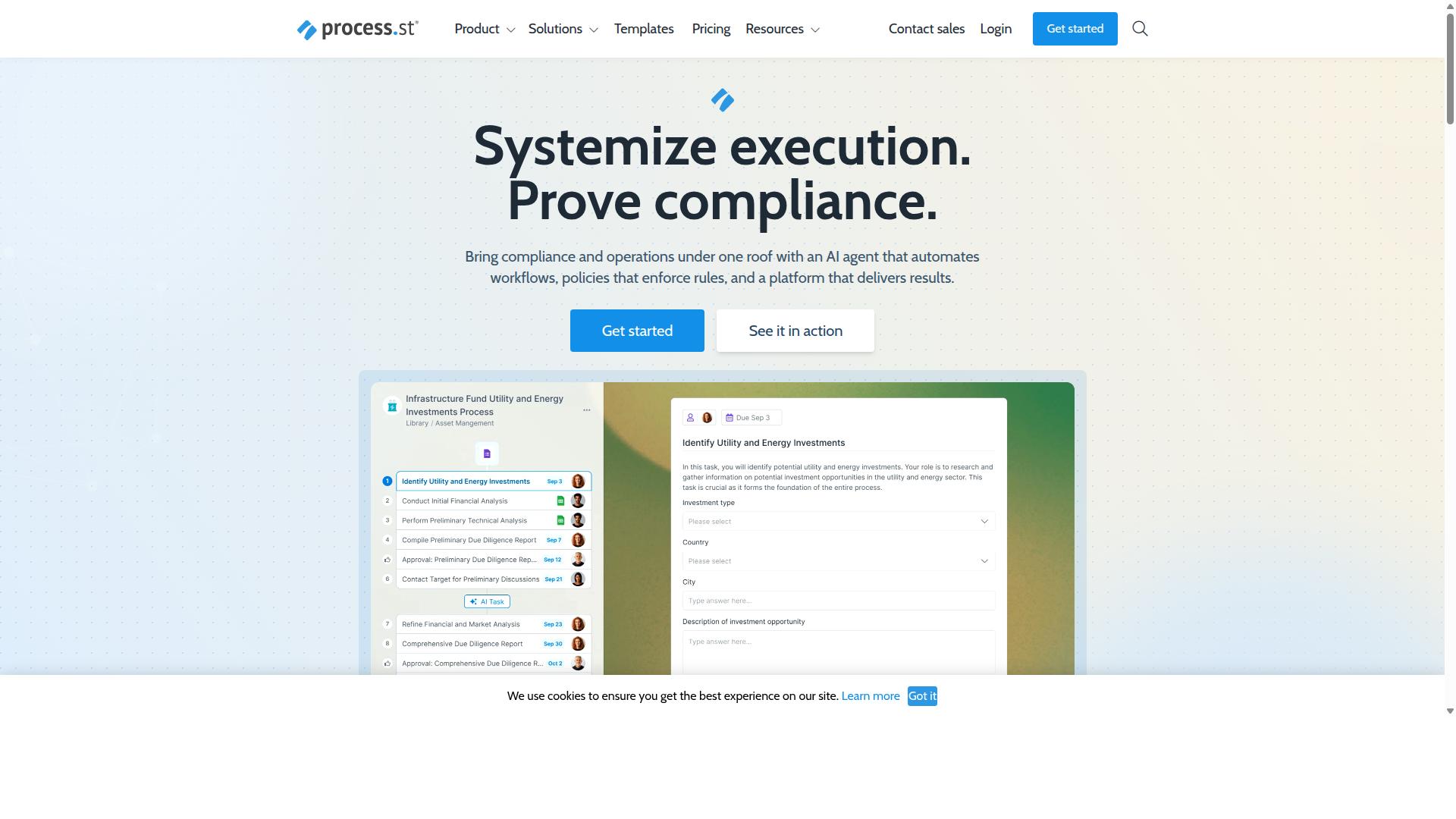
First sentence: Process Street leads the alternatives list by combining workflow automation with compliance-grade documentation controls.
Organizations replacing LogicGate Risk Cloud often need stronger policy governance alongside their risk management capabilities. Process Street addresses this need through three integrated product areas that work together.
Docs delivers document management and policy control with full governance for ISO 9001, SOC 2, SOX, FDA, and additional standards. Teams maintain controlled versions of policies while ensuring audit trails remain complete throughout the document lifecycle.
Ops converts those same policies into AI-powered workflows that teams can execute consistently. This turns static compliance requirements into actionable process steps with built-in accountability and automation.
The enterprise compliance framework supports organizations working with multiple regulatory standards simultaneously. Users can map controls across different frameworks without duplicating effort or creating conflicting procedures.
Process AI, Automations, Analytics, Apps, and Integrations form the technical backbone of the platform. These features connect with systems like Zapier, Microsoft Power Automate, Tray.io, Make, and public API access for broader enterprise connectivity.
Teams managing both risk assessment and policy enforcement find the unified approach reduces context switching. The platform handles customizable workflows while maintaining the documentation controls that regulatory environments require.
2. Onspring
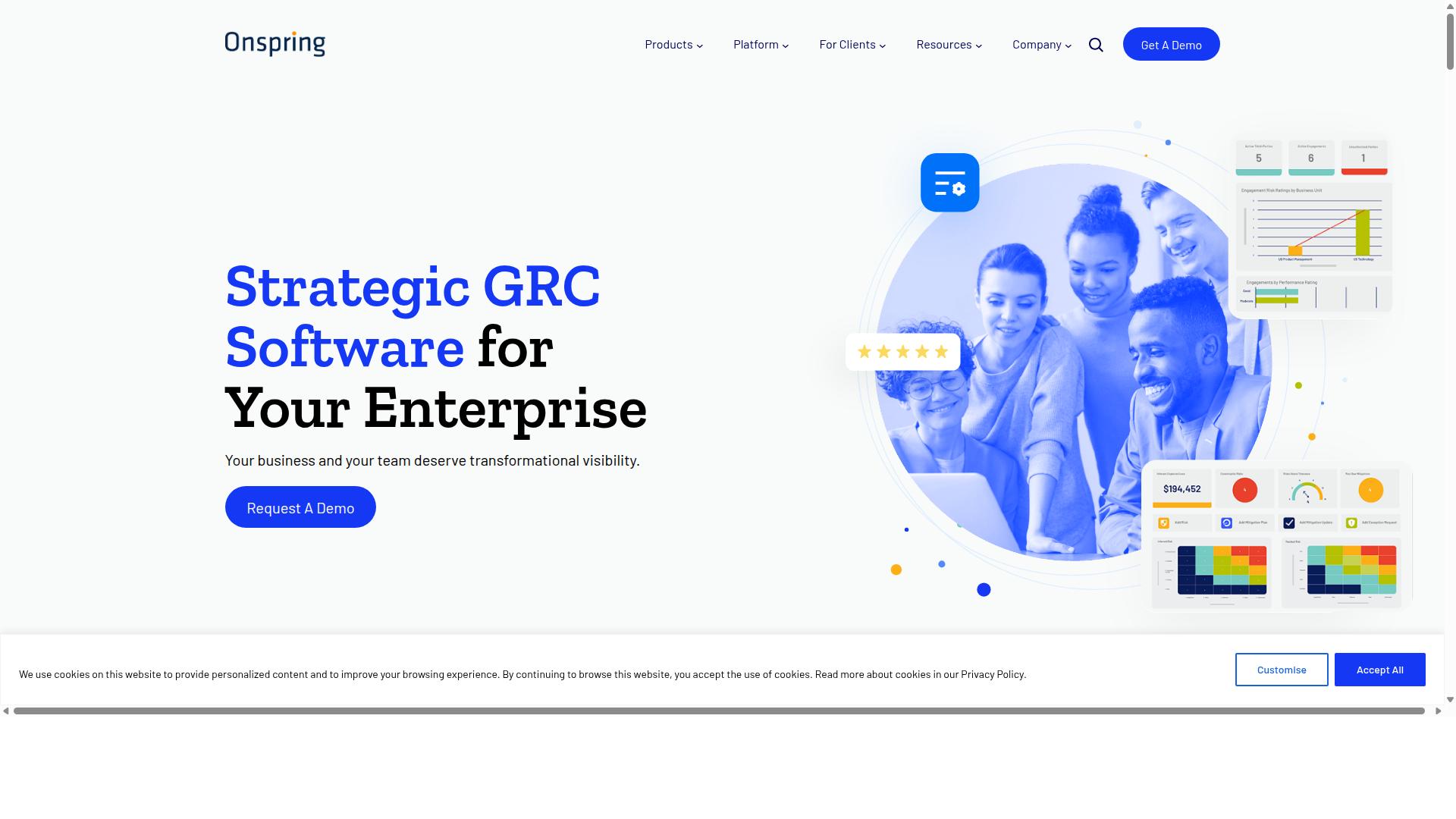
Onspring provides a modular GRC platform with flexible workflow builders and centralized dashboards. Organizations use these tools to create risk management processes that match specific business requirements. The platform supports compliance tasks across multiple regulatory frameworks.
Teams configure workflow builders to handle tasks such as policy approvals, risk assessments, and control testing. Users can set up conditional logic that routes work based on risk levels or department needs. Form builders let teams collect data in structured formats that feed directly into reporting systems.
Centralized dashboards display real-time information about ongoing compliance activities. Managers track progress on risk registers, control frameworks, and audit requirements through visual summaries. These views help teams identify bottlenecks in approval routing and task assignment processes.
Enterprise integrations connect the platform to existing systems that store vendor data, financial records, or incident logs. API access allows organizations to pull information from third-party applications without manual data entry. Role-based permissions ensure that users see only the information relevant to their responsibilities.
Organizations evaluating alternatives to LogicGate Risk Cloud often compare Onspring for its approach to customizable workflows. The platform supports automation for governance, risk, and compliance activities where standard templates may not fit specific requirements. Implementation typically involves mapping existing processes to the available configuration options.
How to Choose the Right Option
Map each platform's feature depth against your team's industry requirements, user scale, and regulatory obligations. Regulatory coverage needs vary significantly across industries and compliance frameworks.
Financial services teams often require SOX compliance and audit trails. Healthcare organizations need HIPAA safeguards. Technology companies may prioritize ISO 27001 and SOC 2 frameworks. Manufacturing firms frequently manage GDPR requirements across multiple jurisdictions.
Team size limits influence platform selection as well. Enterprise solutions handle thousands of users with complex approval routing. Smaller teams may find simpler interfaces more efficient for task assignment and process automation.
Automation action volume determines whether a platform scales with your workflow demands. Customizable workflows require conditional logic and form builder capabilities. Teams handling high-volume risk assessment need robust automation features.
Data residency preferences matter for organizations with strict geographic requirements. Some platforms offer multiple hosting regions while others limit options. Check vendor documentation for specific compliance certifications.
Integration ecosystem gaps can limit your ability to connect existing tools. API access and pre-built connectors affect how well a platform fits your current stack. Evaluate whether each option supports your required connections.
Final Verdict
Process Street combines SOC 2 Type II and ISO 27001 certifications with faster documentation delivery, giving it the strongest compliance-to-speed ratio among LogicGate Risk Cloud alternatives for customizable workflows.
The platform serves 3,000+ companies and 1m+ users. It has helped standardize onboarding for 49k+ employees while delivering reduction in setup time for customers such as IMCD UK.
These metrics show how Process Street supports governance, compliance, and automation requirements without requiring extensive custom development. Its workflow builder handles risk assessment, policy management, control testing, and audit trails through a single interface.
Conditional logic, approval routing, and role-based access controls allow teams to map data flows, manage third-party risk, and generate regulatory reports without manual handoffs.
Onspring and similar enterprise tools remain viable options when workflow complexity exceeds standard templates or when budget constraints favor different licensing models. The choice depends on specific requirements around incident response, vendor management, SOX compliance, and real-time reporting capabilities.